

• January - December
    Vol 10 No 1 (2025)
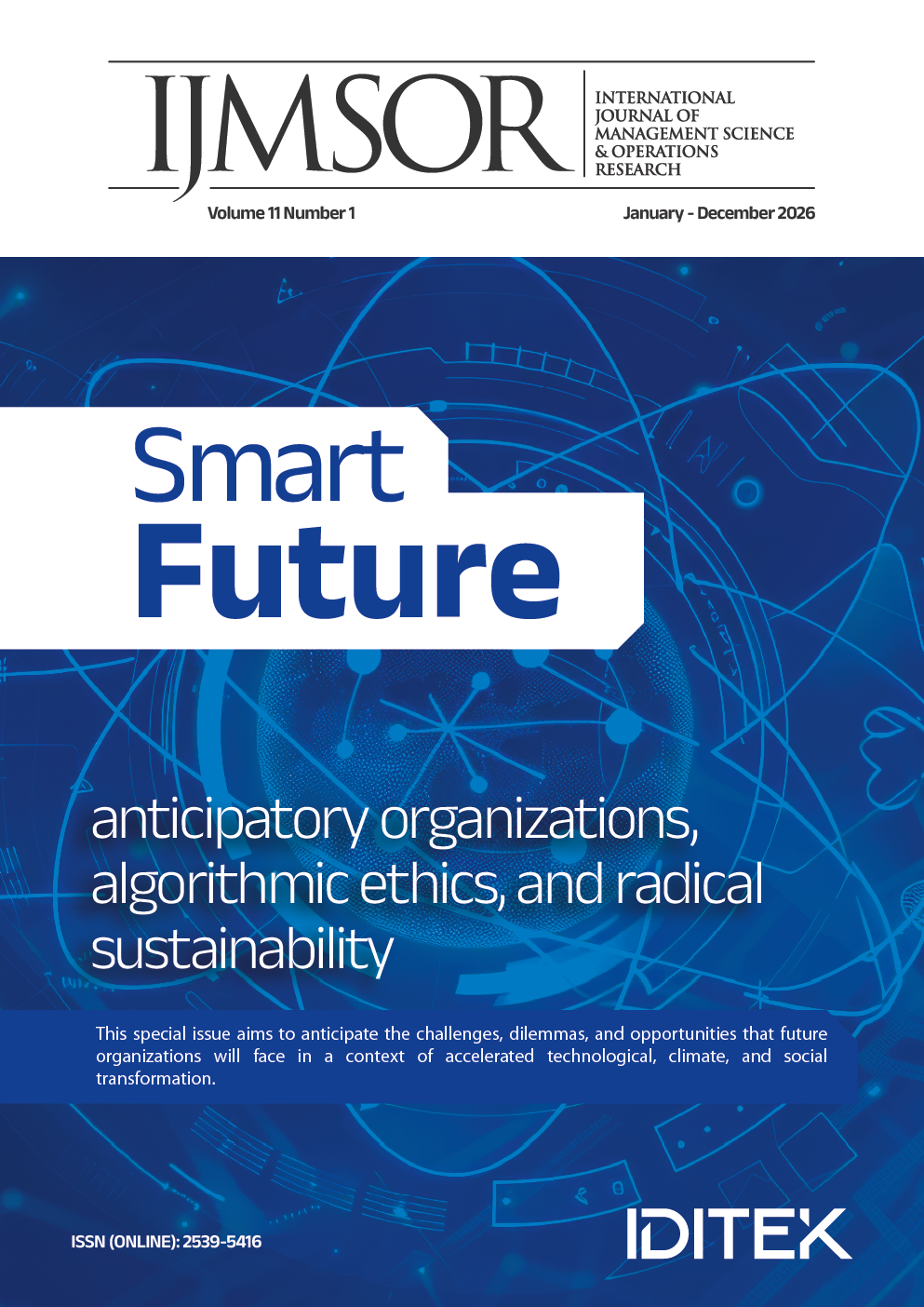
    This special issue aims to gather original research that examines the convergence of advanced technologies, sustainability, and organizational intelligence to explain, model, and optimize decision-making processes in complex contexts. It seeks to provide theoretical and empirical evidence on how these integrated approaches address contemporary challenges across business, governmental, and social environments, from a global, interdisciplinary, and systems-oriented perspective.
  • January - December
    Vol 9 No 1 (2024)
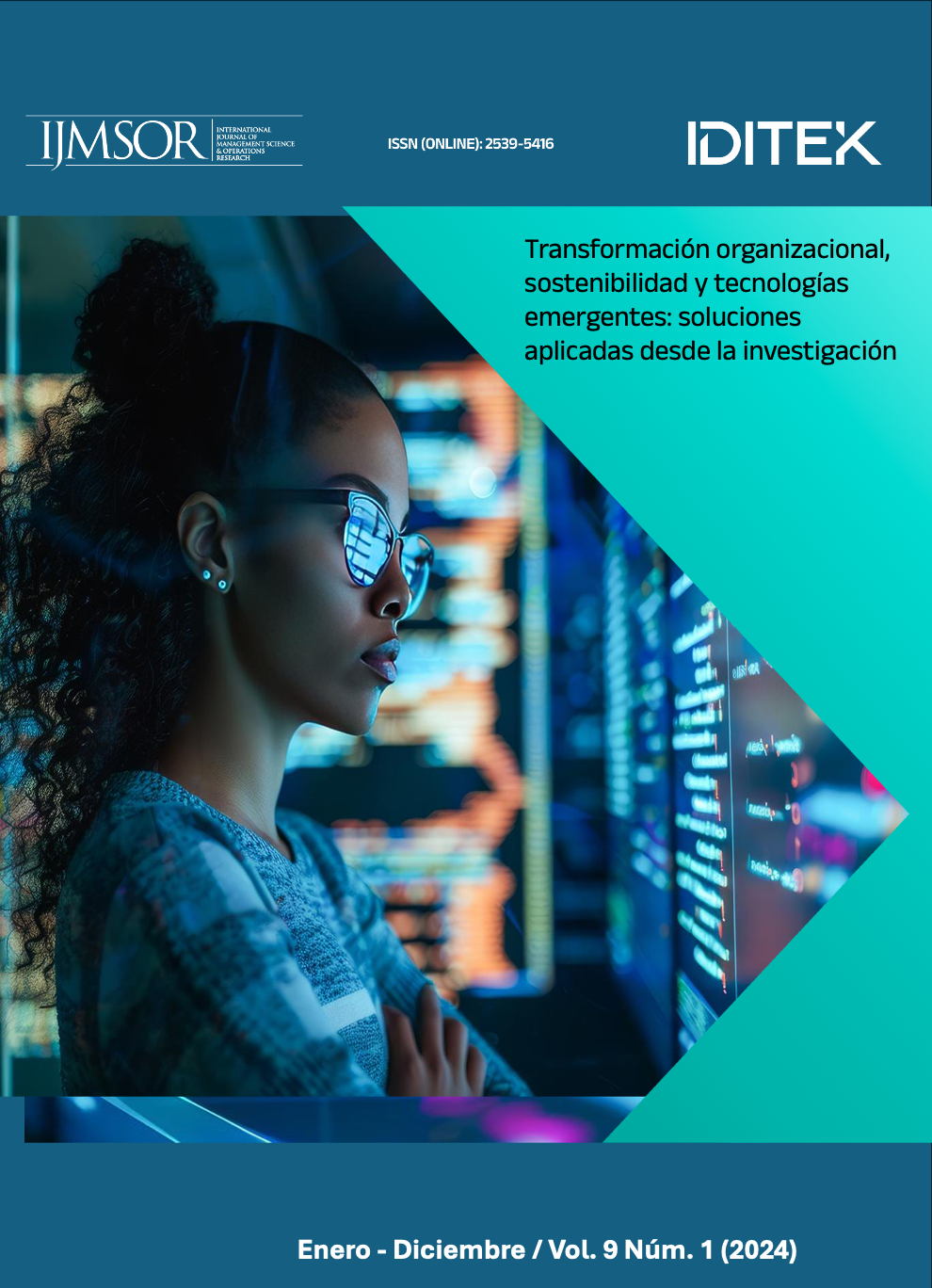
    This special issue aims to disseminate original research analyzing organizational transformation processes driven by emerging technologies, sustainability approaches, and management innovation. It seeks to understand, model, and evaluate how organizations adapt their structures, business models, and decision systems to address contemporary challenges in dynamic environments. Priority is given to methodologically rigorous and practice-oriented studies addressing areas such as artificial intelligence, circular economy, digitalization, and knowledge management across public, private, and social sectors, while fostering international scientific collaboration and knowledge integration within the IJMSOR research community.
  • January - December
    Vol 8 No 1 (2023)
    This issue offers a comprehensive perspective on how organizations are navigating increasingly complex environments by integrating artificial intelligence, data analytics, and sustainability into their decision-making processes. Across the articles, readers will find quantitative models, predictive tools, and advanced methodologies designed to optimize operations, anticipate future scenarios, and build competitive advantages in dynamic contexts. The content bridges theoretical rigor with practical application, illustrating how techniques such as regression, simulation, and correlation analysis become essential instruments for addressing real-world challenges in both public and productive sectors. Overall, it provides an academic journey that connects innovation, management, and technology, aimed at those interested in understanding and applying evidence-based strategic solutions in emerging economies
  • Jenuary - December
    Vol 7 No 1 (2022)
    This issue offers an engaging exploration of how innovation, advanced analytics, and emerging technologies are reshaping the way organizations understand and manage their processes. Through a range of studies, real-world challenges are addressed using quantitative and strategic approaches, integrating tools such as artificial intelligence, data analysis, and optimization models to enhance efficiency, decision-making, and sustainability. Beyond the technical dimension, the articles maintain a strong connection with real contexts, demonstrating how these solutions are applied across productive, social, and organizational environments—particularly within transforming economies. It is a compelling read for those interested in understanding current trends and applying scientific knowledge to real-world scenarios of management and innovation.
  • Jenuary - December
    Vol 6 No 1 (2021)
    This issue provides an analytical perspective on how organizations are evolving in response to changing environments through the use of management models, technological tools, and data-driven approaches. Across its articles, various scenarios are explored where innovation, process optimization, and informed decision-making become essential drivers of organizational performance. The studies integrate quantitative methodologies and applied frameworks that help explain complex phenomena and transform data into actionable strategies. It is a valuable read for those interested in deepening their understanding of the intersection between management, technology, and analytics, with a practical focus aligned with today’s organizational challenges.
  • (January - December)
    Vol 5 No 1 (2020)
    This issue presents an applied perspective on management and operations, where data analysis, innovation, and process structuring emerge as key elements for understanding how organizations function. Through a series of studies, it addresses challenges related to operational efficiency, decision-making, and adaptation to dynamic environments, integrating methodological tools that translate theory into practical solutions. The content highlights how scientific knowledge connects with real-world needs, offering valuable insights for improving management practices and strengthening organizational responsiveness in diverse contexts.
  • Enero - Diciembre
    Vol 4 No 1 (2019)
  • (January - December)
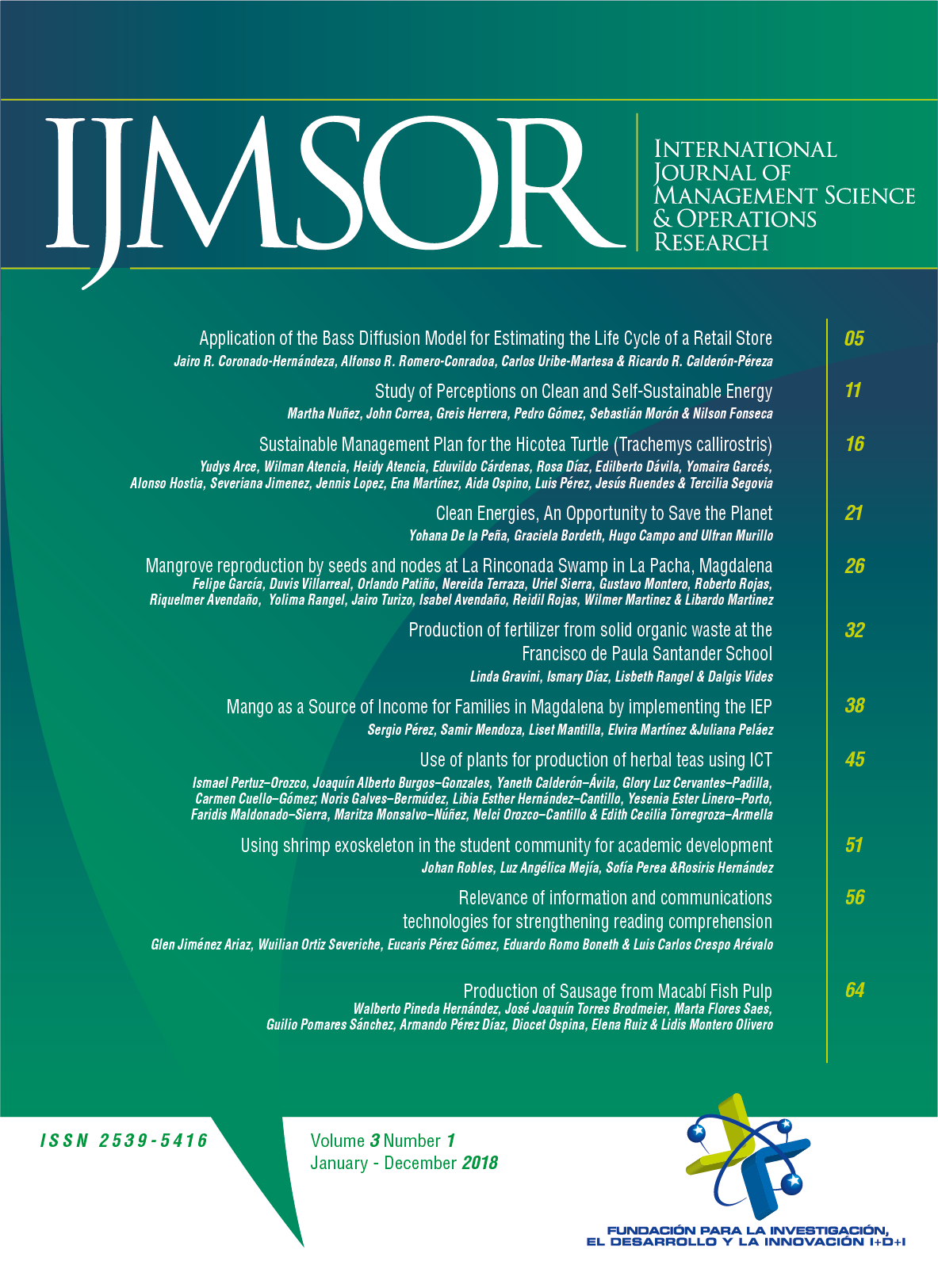
    Vol 3 No 1 (2018)
  • (January- December)
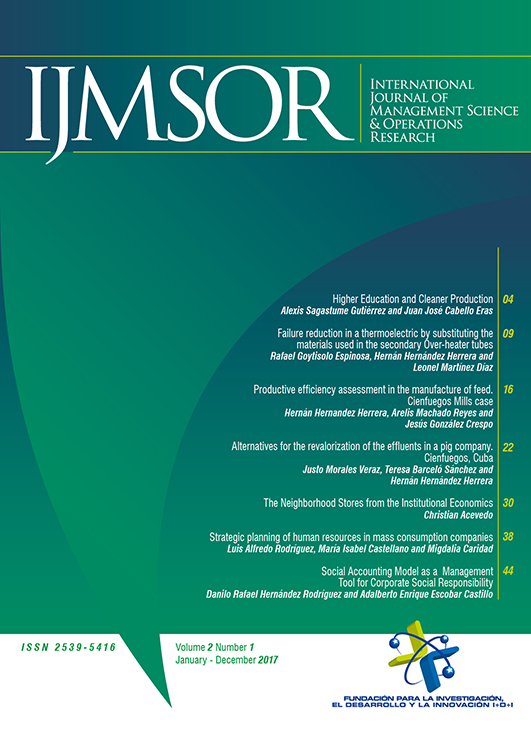
    Vol 2 No 1 (2017)
  • (January - December)
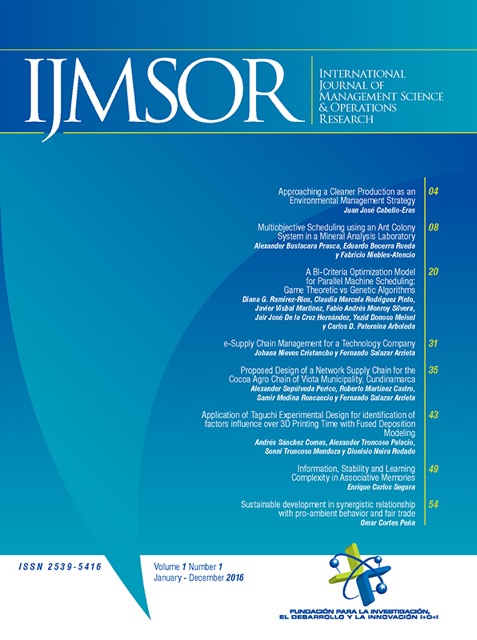
    Vol 1 No 1 (2016)